

Behavioral health software unifies clinical documentation, admissions, billing, and compliance into a single platform purpose-built for mental health and substance use disorder (SUD) treatment. If your organization is consolidating point tools, or replacing aging EHR software, this guide explains the features that matter most in a behavioral health EMR and what to test before signing.
Below, we cover the best behavioral health solutions on the market today and what each does best.
Key Takeaways
- Behavioral health software is not a generic EHR: It bundles EMR, CRM, and revenue cycle management (RCM) with workflows for group therapy, Intensive Outpatient Programs, PHP, residential care, ASAM-based level-of-care decisions, and 42 CFR Part 2 consent. A general medical EHR rarely supports these capabilities without heavy customization.
- AI-assisted documentation has become a buyer-evaluation criterion: Ambient scribes and AI-generated note drafts powered by artificial intelligence and machine learning can reduce charting time, but require careful review of accuracy, audit logs, and clinician oversight.
- Implementation typically runs 60–120 days: Plan for a sandbox pilot, phased data migration, and 30–90 days of post-go-live hypercare before measuring ROI.
- Compliance readiness should be evidenced, not promised: Ask for SOC 2 reports, encryption architecture, immutable audit logs, HIPAA compliance documentation, and 42 CFR Part 2 evidence up front.
Ready to see how an all-in-one platform handles your specific workflows? Request a personalized demo of Alleva to walk through admissions, clinical documentation, and billing in one place.
What is Behavioral Health Software?
Behavioral health software is EHR software built around the workflows, documentation, and regulatory needs of mental health and addiction treatment programs. It typically bundles clinical documentation with admissions, billing, customer relationship management (CRM), and compliance tooling so behavioral health organizations can run the full client journey from referral to discharge in one system.
The scope matters. Behavioral health covers both mental health and SUD treatment, and the term “behavioral health EHR” generally implies support for multidisciplinary care teams, group therapy, integrated care models, and specialty programs like Intensive Outpatient Programs (IOP) and partial hospitalization (PHP).
Best Behavioral Health Software Solutions
Here are the best vendor options if you are looking to buy into behavioral health software services for your practice.
1. Alleva – Best behavioral health EMR, GRC, and AI in one
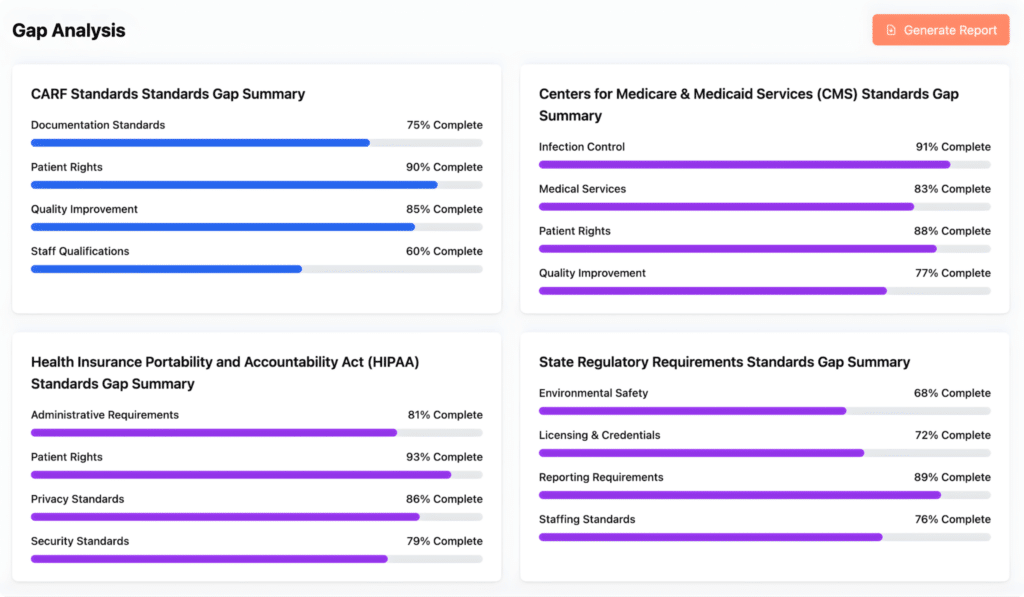
Alleva is a behavioral health EHR with clinical compliance built-in.
Alleva is an EHR software platform built exclusively for behavioral health providers and addiction treatment centers, combining clinical documentation, billing, and AI-powered tools in one system. It supports the full continuum of care from admissions through discharge across detox, residential, PHP, IOP, and outpatient programs.
Alleva works well for treatment centers that want HIPAA-compliant ambient AI (Echo) to generate audit-ready session notes in real time without manual paperwork, and to keep treatment plans, medication management, and billing tied to the same client record.
Alleva Features
- Echo ambient AI for session notes
- TravisAI in-app workflow assistant
- Integrated billing with Waystar VOB
- Custom dashboards with real-time data analytics
- ePrescribing with drug interaction alerts
- Branded patient portals and telehealth
Pros
- Built specifically for behavioral health
- AI reduces documentation burden significantly
- Complete compliance module, audit-ready
Cons
- Niche focus limits broader healthcare use
2. Owl Practice – Best for Canadian Mental Health Practitioners
Owl Practice is an all-in-one practice management and EHR software platform built specifically for Canadian therapists, psychologists, and social workers. It handles scheduling, client records, billing, telehealth, and notes while staying compliant with Canadian data privacy laws like PHIPA.
Owl Practice works well for solo therapists scaling into group practices who need PHI-compliant patient engagement tools designed around Canadian regulations rather than U.S. HIPAA standards.
Owl Practice Features
- Integrated video therapy with screen sharing
- Online booking and paperless client intake
- Secure messaging and client portal
Pros
- Built for Canadian privacy laws
- 1-on-1 onboarding with real humans
- 14-day free trial, no card
- Scales from solo to group
Cons
- Add-on services increase total cost
- Fewer integrations than larger platforms
3. Novari Mental Health and Addictions – Best for Centralized Regional Referral Management
Novari Mental Health and Addictions (MHA) is a referral management platform that streamlines intake, triage, routing, and processing for hospitals, health regions, and public sector agencies handling behavioral health services. It uses AI-enabled transcription and bed management tools to coordinate high-volume referrals across multiple providers and care coordination models.
Novari MHA works well for regional central intake programs that need to consolidate referrals from EHR software, fax, and patient self-referrals into a single platform with real-time status tracking.
Novari MHA Features
- Real-time wait list and load balancing
- Configurable multi-step clinical workflows
- Patient email and SMS notifications
- Multi-source referral intake including fax
- Live referral status tracking for clinicians
Pros
- Massive capacity gains over paper
- Integrates with major EMR systems
- Scales to complex regional models
Cons
- Built for institutions, not clinicians
- Heavy configuration and implementation required
- Not designed for private practices
4. RethinkBH – Best for ABA Therapy Data Collection
RethinkBH is a data collection and clinical management platform built specifically for Applied Behavior Analysis (ABA) therapy practices serving clients with autism and developmental needs. It combines a mobile data collection app, customizable treatment libraries, and EHR software functionality to help RBTs and BCBAs document sessions, build treatment plans, and track client outcomes.
RethinkBH works well for ABA practices that need offline data collection on mobile devices with real-time syncing once back online, so therapists can capture session data anywhere.
RethinkBH Features
- Mobile app with offline data syncing
- 1,500+ customizable treatment protocols and goals
- Patent-pending Medical Necessity Assessment tool
- VB-MAPP assessment integration for clinicians
- Parent portal for caregiver engagement
- Video-based training embedded in curriculum
Pros
- Works offline in any setting
- Strong clinical training resources included
- Supports the full data collection range
- Built specifically for ABA workflows
Cons
- Narrow focus on ABA only
- Pricing not publicly available
- Steeper learning curve for newcomers
5. Doxy.me – Best for Simple HIPAA-Compliant Telemedicine
Doxy.me is a browser-based telemedicine platform built exclusively for healthcare providers to deliver secure virtual care sessions to patients. It requires no downloads, logins, or installations, working through a single URL that patients click to join their appointment.
Doxy.me works well for solo practitioners and clinicians who want frictionless telehealth tools for virtual care, with over 12 billion minutes of video delivered to date.
Doxy.me Features
- No download or patient login required
- Group calls and virtual backgrounds
- Built-in waiting room and check-in
- SOAP and DAP note documentation
- Live session transcripts available
- Screen share and patient transfer tools
Pros
- Extremely simple for patients
- HIPAA compliance plus GDPR and SOC 2
- Free plan available for providers
- Works in any modern browser
Cons
- Limited features on free tier
- Not a full EHR replacement
- Video-only focus, no scheduling depth
6. Greenspace Mental Health – Best for Measurement-Based Care
Greenspace Mental Health is a platform that powers Measurement-Based Care (MBC) for clinics, hospitals, campuses, workplaces, health homes, and accountable care organizations. It automates the collection of Patient-Reported Outcome Measures (PROMs) and visualizes symptom changes so providers can make data-informed clinical decisions and improve outcome tracking across programs.
Greenspace works well for organizations that want to integrate over 500 evidence-based assessments into their workflow and track outcomes across an entire population, not just individual clients.
Greenspace Features
- 500+ evidence-based assessments and outcome measures
- Automated intake and waitlist management
- Individual client symptom tracking dashboards
- Population health hub with stepped care
Pros
- Strong focus on clinical outcomes
- Trusted by major health systems
- Improves client engagement and retention
- HIPAA and PIPEDA compliant infrastructure
Cons
- Not a full EHR replacement
- Implementation requires organizational buy-in
Core Features to Evaluate in a Behavioral Health Platform
When you evaluate platforms, prioritize features that cut administrative work while supporting clinical care. A connected EMR + CRM + RCM suite reduces handoffs and helps limit revenue leakage across billing workflows. Verify e-prescribing with EPCS (Electronic Prescribing for Controlled Substances) and PDMP (Prescription Drug Monitoring Program) access if controlled substances or medication-assisted treatment are part of your care model. For the full comparison, see our EMR software buying guide.
Behavioral Health EHR Software Feature Priorities
| Feature Category | Priority | What to Verify in Demos |
| Clinical documentation | Must-have | Multidisciplinary templates, group note workflows, e-signature, lock/unlock controls |
| Scheduling (individual, group, IOP, PHP) | Must-have | Recurring groups, roster management, waitlist behavior, multi-location views |
| Billing tools and RCM | Must-have | Payer-rule configuration, claim edits, ERA posting, denial workflows |
| Telehealth | Must-have | Visit-to-note linkage, automatic claim triggers, audit logs |
| Validated assessments and outcomes | Must-have | PHQ-9, GAD-7, AUDIT-C, ASAM dimensions; auto-scoring; trending |
| E-prescribing and PDMP access | Conditional | Required if prescribing controlled substances |
| CRM and admissions | Must-have | Referral tracking, lead-to-admission funnel, VOB workflow |
| Compliance and GRC tools | Must-have | Role-based access, audit trails, 42 CFR Part 2 support |
| Reporting and analytics | Must-have | Outcome trends, payer mix, utilization, denial reasons |
| Integrations (FHIR, clearinghouse, lab integrations) | Should-have | API documentation, supported partners, data refresh frequency |
| Mobile access | Nice-to-have | Native apps vs. responsive web, offline behavior |
| Multi-site dashboards | Nice-to-have | Roll-up by location, payer, program |
Clinical Documentation Priorities
Clinical documentation should support multidisciplinary teams with behavioral-health-specific templates that reduce charting time and support audit readiness. Progress-note templates that map to CARF and Joint Commission expectations save reviewers time and lower compliance risk, and templates tied directly to treatment plans keep clinical work and billing aligned.
A well-designed documentation workflow also speeds supervision and billing reconciliation. The right templates spare your team from chasing missing signatures and orphaned progress notes at month-end.
Scheduling, Billing, and Admissions
Scheduling should handle individual, group, IOP, and PHP billing workflows without workarounds. Claims management must enforce payer rules, automate claims submission and claim edits where possible, and surface denials so your billing team can act quickly.
For a deeper look at how built-in billing changes day-to-day operations, see our breakdown of why built-in EMR billing matters for behavioral health practices.
Telehealth, Assessments, and E-Prescribing
Prefer native telehealth or tightly integrated vendors to avoid extra logins and fragmented records. Include validated assessments, outcome measures, EPCS, medication management features, and PDMP lookup to keep controlled-substance workflows safe and auditable.
The CDC reported a significant rise in telehealth use during the early pandemic period, and remote behavioral health visits have remained a meaningful share of care delivery. Your platform should treat telehealth as a first-class workflow, not an add-on, especially as virtual care continues to factor into payer expectations.
Implementation Timeline, Data Migration, and the Pilot Approach
Behavioral health software implementations typically run 60–120 days from contract to go-live, depending on program complexity, integrations, and the volume of legacy data to migrate. Plan for executive alignment, scoped configuration, controlled data migration, training, a sandbox pilot, and staged go-live with hypercare.
Start with executive alignment and a clear project plan that maps contracts to configuration, migration, training, pilot, and staged go-live. For practical guidance, see our walkthrough on successfully migrating your EMR with Alleva. Keep each handoff tightly scoped and assign a single owner for data, clinical workflows, and billing to reduce rework.
Typical Implementation Phases
| Phase | Typical Duration | Key Activities |
| Contract and kickoff | 1–2 weeks | Sponsor alignment, scope confirmation, milestone lock-in |
| Configuration and build | 3–6 weeks | Program templates, payer rules, role-based access setup |
| Data migration | 2–4 weeks | Patient, encounter, billing, and document migration in batches |
| Sandbox pilot | 2–4 weeks | Realistic-data testing, end-to-end workflow validation |
| Training | 2–3 weeks | Role-based training, super-user enablement |
| Staged go-live | 1–2 weeks | Phased rollout by program or location |
| Hypercare and stabilization | 30–90 days | Issue resolution, process refinement, ROI baseline |
Contract, Kickoff, and Configuration
Align sponsors, confirm scope, and lock milestones in a focused kickoff. Define configuration priorities by program and clinical team so build work is modular and testable.
Data Migration and Validation
Move clients, encounters, billing history, and documents in controlled batches. Reconcile source and target record counts, run spot audits, and log discrepancies. Rigorous validation, paired with documented data privacy controls, is one of the strongest predictors of post-go-live adoption.
Training and Sandbox Pilot
Seed a sandbox with realistic client and billing data. Run a 30-day pilot, or a single-program pilot, with live users to exercise end-to-end workflows, care coordination handoffs, billing, and reporting. This surfaces gaps before wider rollout and gives users hands-on practice.
Pilot Acceptance and Go-Live Staging
Use defined acceptance criteria, simulated billing runs, and prioritized issue lists. Stagger go-live by program or location, maintain focused hypercare, and plan a 30–90-day review to capture fixes and process changes.
Cost, Pricing Structure, and Total Cost of Ownership
Adopting a behavioral health platform creates upfront license and module expenses plus implementation and custom-work costs that can push budgets outward. The realistic view requires looking past sticker price to total cost of ownership (TCO) across the first 24–36 months.
Common Pricing Models
Most vendors charge by some combination of:
- Module mix: EMR, CRM, RCM, telehealth, AI documentation, BI/analytics each priced separately or bundled
- Per-user seats: Clinical users, admin users, view-only roles often priced differently
- Per-location: Multi-site practices typically pay per facility or per program
- Implementation and training fees: Often quoted separately from recurring software fees
- Add-on features: EPCS, advanced AI, custom reports, marketplace integrations
Match the pricing model to your patient volume, number of sites, and billing complexity. A per-user model that fits a 30-clinician program may break at 300 clinicians.
Hidden Costs to Watch For
- Implementation professional services and change orders
- Integration build and ongoing API maintenance
- Data migration, custom reports, and additional sandbox environments
- Annual price increases at renewal (negotiate caps up front)
- Training refreshes for new hires or major releases
Plan a 10–30% contingency for these items in your first-year budget.
TCO Framework
TCO = Licensing + Implementation + Support/Maintenance + Change Management
Change management (training, process redesign, and temporary productivity loss during rollout) is the line item most often underestimated. A realistic plan accounts for it explicitly rather than hoping it disappears.
Budgeting Tips and Negotiation Checkpoints
- Cap implementation change orders and require defined SLAs for uptime and support response times
- Define pilot terms with clear rollback or exit criteria
- Negotiate capped annual price increases and predictable renewal terms
- Add exit-data SLAs in case of vendor change or platform sunsetting
A small clause negotiated up front can save months of billing headaches later. It is reasonable, and expected, to ask for these terms during negotiation.
If you want a tighter budget scenario, map costs by role and workflow to reveal where one connected platform reduces duplicate billing and documentation work. That’s where the payback case usually lives.
See the Platform in Action
If you want to see how connected workflows can reduce administrative work and support stronger financial and clinical performance, the most efficient next step is a live walkthrough of Alleva’s behavioral health operations platform. Our team will tailor the demo around the programs, workflows, and integrations that matter most to your organization.
–
Frequently Asked Questions About Behavioral Health EHRs
Here are some questions people also ask about behavioral health software:
What is the difference between a behavioral health EHR and a general medical EHR?
A behavioral health EHR is built around the workflows, documentation, and regulatory needs specific to mental health and substance use care rather than general primary or specialty medical practice. Expect configuration for multidisciplinary teams, group therapy scheduling, IOP/PHP/residential episode tracking, integrated care workflows, and protections for 42 CFR Part 2 consent and sharing.
These platforms also prioritize measurement-based care with built-in validated instruments and trending so clinicians can track client outcomes over time. That reduces manual work and supports better clinical decisions compared with a general medical EHR that must be heavily customized to match these specialty flows.
For a side-by-side breakdown, see our explainer on EMR vs. EHR and what the difference means in practice.
Does the system include standard assessments like PHQ-9 and GAD-7, and are they auto-scored and trended?
Most behavioral health platforms include common validated instruments like the PHQ-9 and GAD-7 and let you configure when they appear in intake or follow-up workflows. Scores are typically generated automatically at completion and stored as discrete data so they can be trended on the client record and fed into outcome reports.
Confirm during a demo that the product offers configurable assessment schedules, visible trend charts in the client chart, and exportable score data for reporting and payer requirements.
Can I run group therapy sessions and generate correct group claims from progress notes?
Yes, when the platform supports group workflows end-to-end. Look for scheduling that handles group rosters, attendance capture tied to a single group note, and claim logic that applies group modifiers, per-participant units, and co-facilitator rules so claims reflect actual service delivery.
During testing, simulate a multi-facilitator group, record attendance in the same progress note, and verify the claim preview shows the correct CPT/HCPCS codes, modifiers, and units before submission.
How long does implementation usually take and what data will you migrate from our legacy system?
Implementation timelines depend on program complexity, integrations, and the volume of legacy data, with projects commonly running 60–120 days from kickoff to go-live. Typical migrations include active client demographics, recent encounters, open authorizations, payer files, and billing balances; scanned documents and historical notes can be migrated selectively based on scope.
Ask for a migration scope document that lists each data type, sample record imports, a validation plan, and a recommended pilot to confirm workflows before full cutover.
Does the platform support e-prescribing with EPCS and PDMP integration for controlled substances?
Many behavioral health platforms offer integrated e-prescribing that supports EPCS for controlled substances and connections to state PDMPs where available. Verify the vendor’s supported states for PDMP queries, the credentialing required for EPCS provisioning, and whether prescription history and PDMP results appear directly in the medication management workflow to reduce clicks and support compliance.
How much does behavioral health software typically cost?
Pricing varies widely by vendor, module mix, user count, and program complexity. Most platforms quote a combination of per-user monthly fees plus one-time implementation costs, with additional fees for premium modules like advanced AI documentation, BI, or specialty integrations.
Build your evaluation around total cost of ownership across 24–36 months, not the first-year sticker price.
What should we do if our current EMR vendor is acquired?
Review your contract for exit-data SLAs, platform stability clauses, and price-protection language. Confirm in writing what happens to your current product roadmap, support model, and pricing over the next 12–24 months. If the answers are unclear or unfavorable, treat the acquisition as a trigger to evaluate alternatives, but do not rush a switch without a documented migration plan.

Kayla Briones is Sr. Product Marketing Manager at Alleva.